


Protecting Our Pollinators through Responsible Growing Practices
We understand and share your concern about the health of the bees which pollinate our crops and support our environment. The health of bees is critical to us all, and Proven Winners needs bee pollinators as much as anyone. With the help of our industry leaders, we are actively working to support, report, and react to the science-based information about bees and possible declines in bee populations.

Proven Winners is a small group of family-owned businesses run by plant loving, nature minded people. Our plants start out as young plants grown by six Proven Winners propagators (greenhouse growers) in the U.S. and Canada. Our job is to produce and sell these young plants to the thousands of independent growers in the U.S. and Canada who in turn grow our plants into the finished product that you see in garden centers. We love gardening and helping our customers to create their own beautiful gardens and outdoor living spaces.
We understand and share your concern about the health of the bees which pollinate our crops and support our environment. The health of bees is critical to us all, and Proven Winners needs bee pollinators as much as anyone. With the help of our industry leaders, we are actively working to support, report, and react to the science-based information about bees and possible declines in bee populations. Based on credible reports, we understand that bee colonies are suffering from a number of issues including decimating Varroa mites, the stress of being trucked across long distances to pollinate crops, pathogens, poor beekeeping practices, nutritional issues, habitat loss and climate change.
Another possible cause that has been identified is the use of neonicotinoid insecticides. All young plants produced by the Proven Winners propagator companies are grown without the use of neonicotinoids. More information about neonicotinoids, as well as information on how Proven Winners produces our bee-friendly young plants, can be found below.
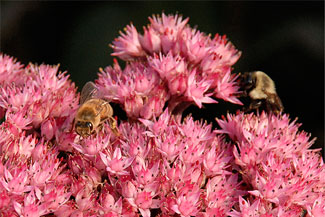 Bees by Numbers
 Bees by Numbers
The number of beehives today is higher than in 1995 when neonicotinoids first came onto the market and are now at 20 year highs in North America and Europe.
Honey production in the United States was up by 14% in 2014 and the number of bee colonies producing honey also increased by 4%.
Places such as Australia that use neonicotinoids but do not have the Varroa mite are suffering zero colony collapse.
The President’s budget for 2016 includes more than $82 million in funding that will be specifically targeted to address pollinator health through various agencies. (Compare that to $34 million in 2014.) That includes additional research funding for the Environmental Protection Agency (EPA) and the USDA.
Honeybees can travel four miles from their hives, gathering nectar and pollen from a wide range of flowers. Clover and alfalfa are their primary food source.
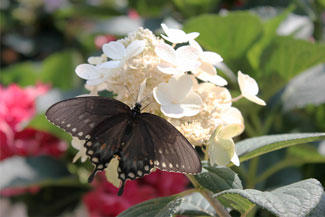 Home Gardeners can help to support pollinator populations by:
 Home Gardeners can help to support pollinator populations by:
Planting a diverse selection of bee-friendly plants and flowers that bloom all season, providing pollen and nesting sources throughout the growing season
Rethinking your mowed lawn—natural spaces support a greater diversity of bees and other pollinators
Providing uncultivated spaces with open mud and fresh water which native mason bees need to build their nests
Use beneficial insects or mites to deal with pests
Use selective insecticides to deal with insect pest problems
Avoid applying any pesticides to plants in flower and during the day when bees, and other pollinators are active.
Calling a local beekeeper to move a large beehive if it is built in a troublesome place on your property rather than using chemicals to kill the bees.
Related Articles
- Bee Experts Dismantle Touted 'Harvard' Neonics-Colony Collapse Disorder Study As 'Activist Science' as published in Huff Post Science. The interesting story behind the original flawed study which created the false narrative of neonicotinoids killing bees.
- USDA Study on Neonicotinoids: A look at studies on neonicotinoids through the years and how they are supported, or not supported, by current bee statistics.
- Bee Deaths Reversal- As Evidence Points Away From Neonics As Driver, Pressure Builds To Rethink Ban as published in Forbes Magazine. This article talks about initial theories that have since been proven inaccurate—the new numbers simply don’t support the “beepocalypse” narrative or identify neonics as the driver of die-offs.
- Key to Honeybee Loss? Mites stink, a report of a Michigan State University study. Interesting new finding on how the Varroa mite is infiltrating bee colonies by masquerading as bees.
- Protecting Pollinators from Michigan State University. Tips for homeowners on how to protect pollinators in their gardens and Q&A about neonicotinoids.
- Planting garden center flowers is good for bees and other beneficial insects, a Michigan State University Paper. A more extensive look at the science behind the use of neonicotinoids written for the home gardener.
Video Resources
- New York Times Report: The mystery of Colony Collapse Disorder has brought honeybees into the public eye. But the story of their plight and its impact is more complicated. A consolidation of news reports and journalistic style reporting on the issue.
- A Thrilling Look at the First 21 Days of a Bee’s Life - TED Talk by Anand Varma. An incredible photographic journey of how bees are born and the challenges they face in the first three weeks of their lives as told by a backyard beekeeper.

We understand and share your concerns about the health of our environment and the critically important pollinators that produce so much of the food we eat and the flowers that enhance our surroundings. Like you, we want to be part of the solution, not the problem.
That motivation has influenced our growing practices as we work to safely produce the plants you grow and love in your gardens. We look forward to seeing more results from the positive research being conducted by credible scientific organizations and the newly formed Pollinator Health Task Force. As you do your research on this topic, we encourage you to do due diligence in vetting your sources before making decisions. Most of all, we encourage you to grow more bee-friendly plants and flowers to enhance the ecosystem around you which supports all of our vital pollinator populations. By working together, we can accomplish great things.
Mark Broxon
CEO, Proven Winners
Email: mark@provenwinners.com