


The Heat is On Collection, Norman Winter - Hosting Pollinators Is a Thing of Beauty
The Garden Guy wants to do his part to help you celebrate National Pollinator Week. If I were to write about all of the Proven Winners plants which are important to pollinators it would be about the length of the book War and Peace. My goal here is to help you focus and to maybe eliminate a few misconceptions.

A female Eastern Tiger Swallowtail visits the Color Coded One in a Melon coneflower at The Garden Guy’s house.
Hosting Pollinators Is a Thing of Beauty
The Garden Guy wants to do his part to help you celebrate National Pollinator Week. If I were to write about all of the Proven Winners plants which are important to pollinators it would be about the length of the book War and Peace. My goal here is to help you focus and to maybe eliminate a few misconceptions.
Many of you may think that a garden geared to attract pollinators will look like a weed patch. This could not be further from the truth! Many people find these gardens so beautiful, they are worthy of a featuring in fine coffee table book. If you find yourself wondering where to start, I’ve got a mint of an idea.
All in the Family
In the last Winners Circle newsletter, I hopefully helped jump start you onto pollinator plants with Rockin'® salvias. These salvias are stalwart members of the Lamiaceae or mint family. Great Scott! I'll bet you had no idea you were growing a mint relative! The Rockin salvias are annuals for most of the country, but in the last few years, they have been proving to be award-winning perennials in the South. Proven Winners also has 11 more salvias that are perennials in zones 3 through 8. All of them attract bees, butterflies and hummingbirds, which happen to be pollinators too!
Upscale™ 'Pink Chenille' bee balm (Monarda) was a crowd favorite at the Metrolina Greenhouses Trial Garden Tour in North Carolina. (Photo by Dr. Allen Owings Professor Emeritus Horticulture, LSU AgCenter). |
Upscale™ 'Lavender Taffeta' bee balm (Monarda) with Graceful Grasses® 'Evergold' sedge (Carex) at The Garden Guy’s house. |
Upscale™ 'Red Velvet' bee balm (Monarda) paired with Meant to Bee™ 'Queen Nectarine' anise hyssop (Agastache) at The Garden Guy’s house. |
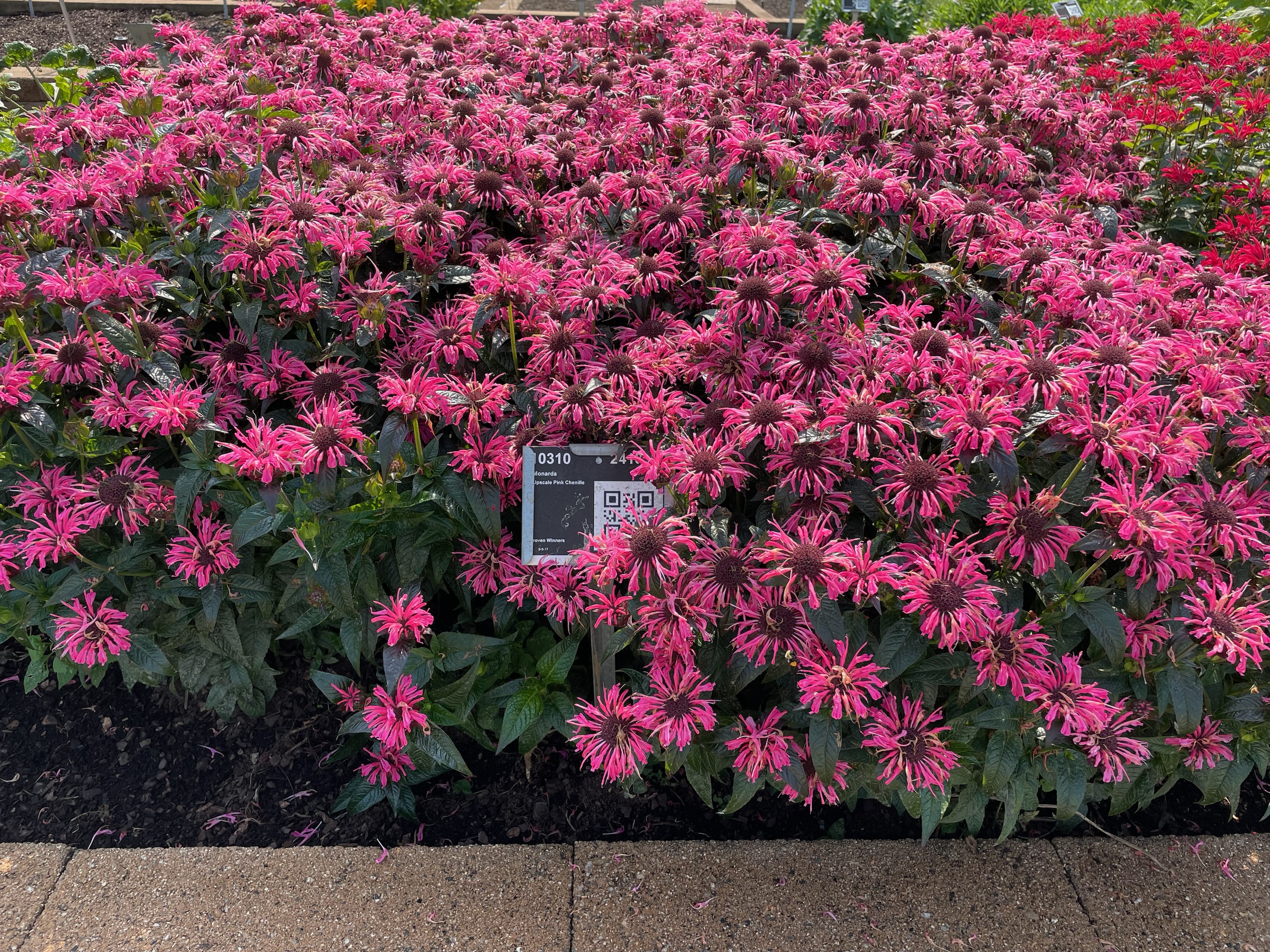
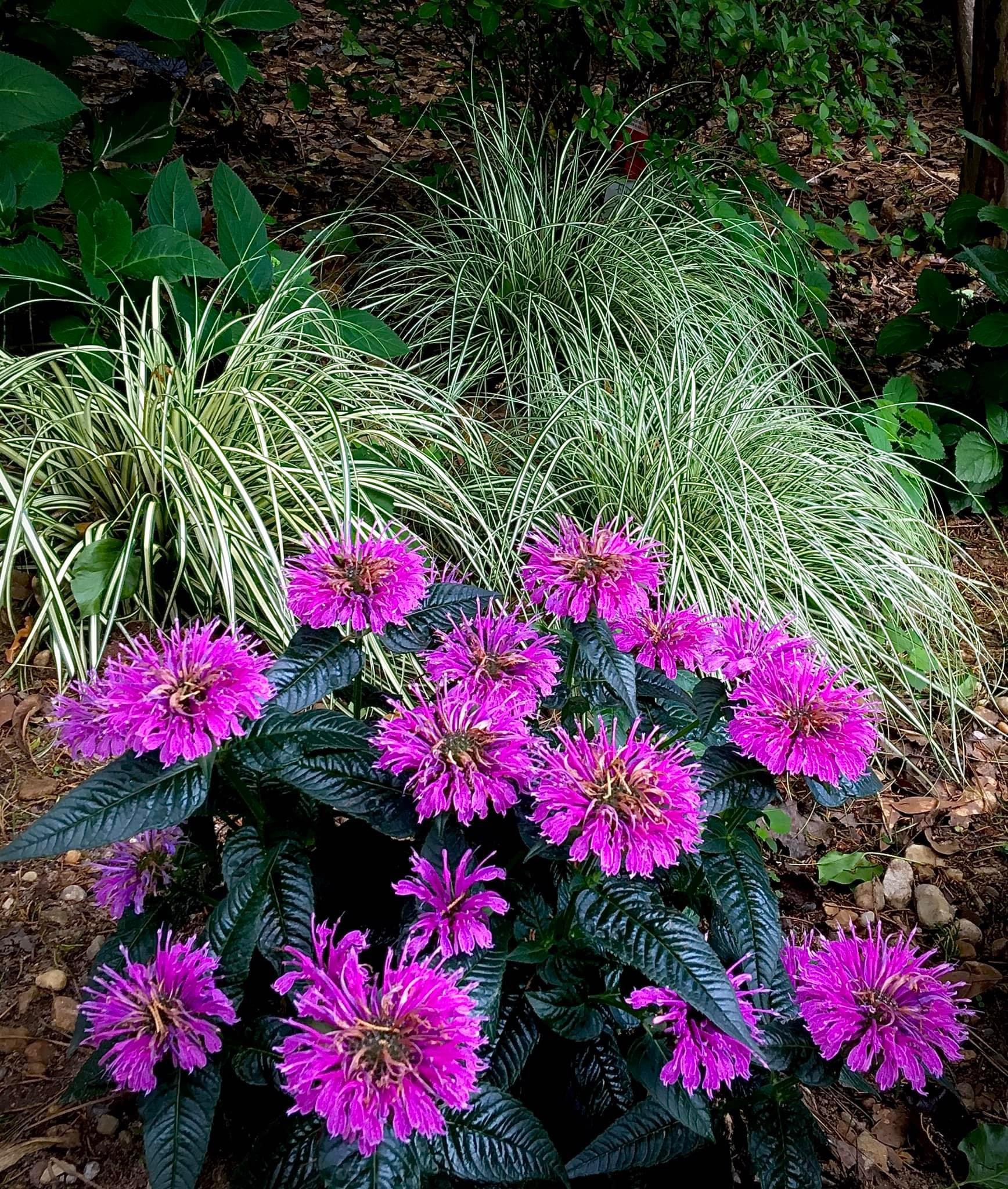
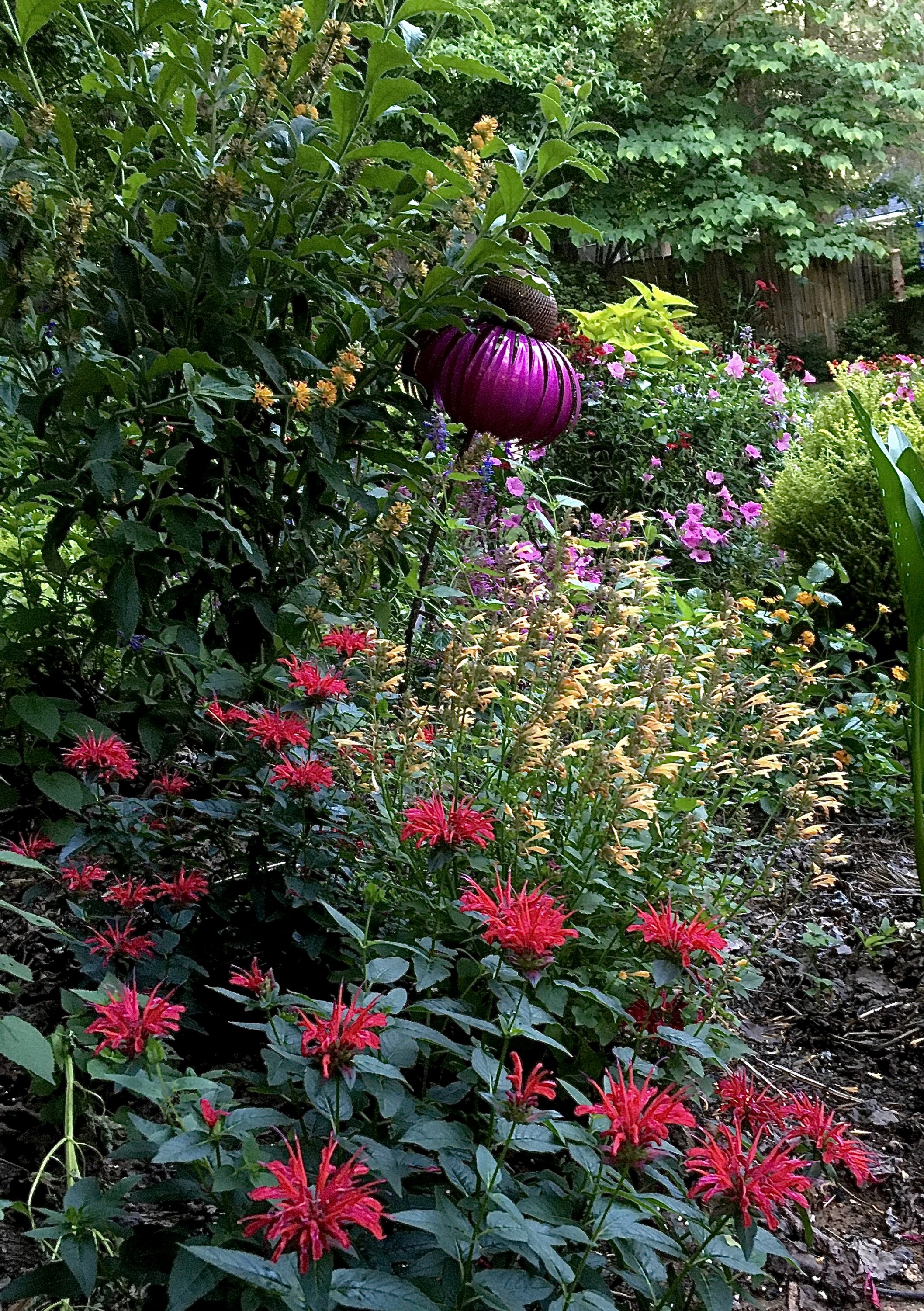
The Lamiaceae or mint family is huge and there are some incredible choices from which to choose. One group that is chock full of native DNA and loved by herbalists is Monarda, commonly called bee balm. Proven Winners has quietly become a major player in the Monarda market.
They have 14 varieties of bee balm including three new selections in the Upscale™ series making their debut this year. The Upscale varieties are taller and really stand out in the garden. Upscale 'Pink Chenille' blew everyone away in 2023 trials. Upscale 'Lavender Taffeta' and Upscale 'Red Velvet' both remind me of nature’s firework display.
Meant to Bee 'Queen Nectarine' and 'Royal Raspberry' anise hyssop, Rockin' Playin' the Blues salvia and Pyromania 'Orange Blaze' red hot poker create a showy display at The Garden Guy’s House. |
Blue Diddley Vitex is a compact version of a |
A pair of Monarch butterflies find the Blue Diddley Vitex to be just perfect. |


Also new this year are two new Agastache, commonly called hummingbird mint, called Meant to Bee™ 'Queen Nectarine', and Meant to Bee™ 'Royal Raspberry'. These two perennials will add the dimension of sound to your garden. The flowers won’t be making the sound, but the bees and rapid wing movement of hummingbirds will tell you the story.
Blue Diddley® Vitex, commonly known as chastetree, is a true Southern garden delight. This compact 3 to 6 feet high and wide shrub is adorned with more treasured blue flowers than you can count and attracts a great mix of butterflies. The contrasting colors of the orange Monarch butterfly enjoying the blue flowers is a wonder of nature.
Breaking Some Myths
Color Coded 'One in a Melon' coneflowers, Rockin' Playin' the Blues salvia and Sunstar Red pentas create a small pollinator welcome center. |
The Common Buckeye butterfly visits the Color Coded 'Orange You Awesome' coneflowers. |


The advent of new colors of Echinacea, commonly called coneflowers, has had some people saying these plants just aren’t native - they are hybrids. Of course, they are hybrids of natives where the best traits of the parents of been utilized. The Color Coded® series from Proven Winners now boasts a half dozen colors, one of which is sure to fit your garden palette.
The Garden Guy is now in his fifth growing season with Color Coded 'Orange You Awesome'. In my garden, I have this flaming orange coneflower paired with blue-toned Augusta™ Lavender heliotrope. Color Coded 'The Price is White' coneflower has some of the largest flowers of any white variety I have grown. Its white flowers always look pristine, never dirty. This year’s Color Coded 'One in a Melon' coneflower also has huge flowers that start off the color of a Rudbeckia and age to a beautiful pastel.
The Color Coded coneflower series attracts a variety of butterfly and bee species. But there is one more myth to discuss, and that is regarding the new Double Coded™ coneflowers 'Raspberry Beret' and 'Butter Pecan'.
Double Coded 'Butter Pecan' and Double Coded 'Raspberry Beret' coneflowers make quite a pairing. |
This Monarch butterfly found the Double Coded 'Raspberry Beret' flowers to be just perfect. |
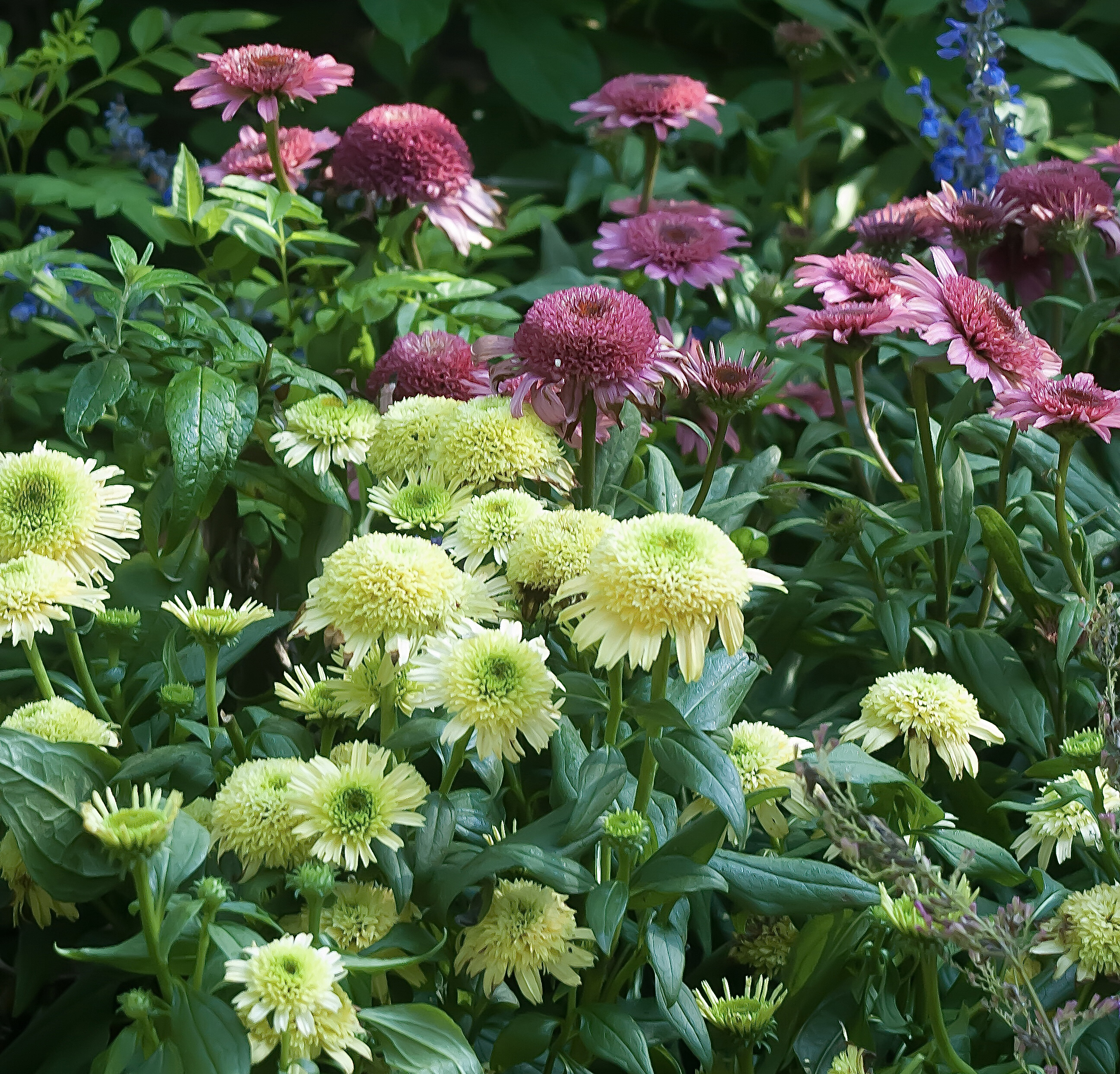
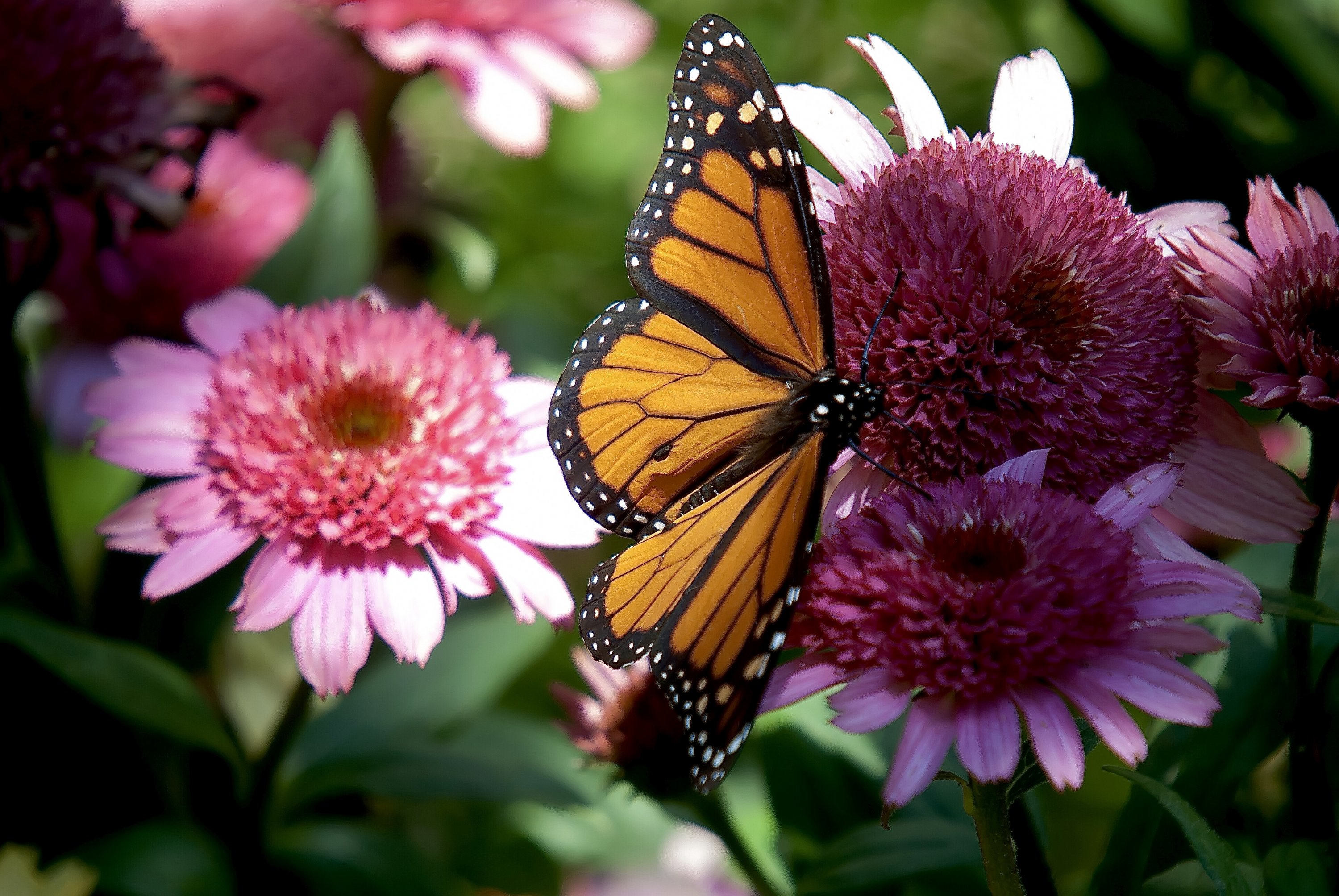
With these coneflowers looking more like coconut cupcakes, how could they possibly feed butterflies too, right? The Garden Guy was able to knock that myth out on the day of planting when both Spicebush Swallowtail and Monarch butterflies visited them. I assure you, your pollinator garden will never look more attractive than with the addition of the Double Coded 'Raspberry Beret' and 'Butter Pecan' coneflowers.
National Pollinator Week will be beautiful and will surely create several "Kodak moments". Follow me on Facebook @NormanWinterTheGardenGuy for more photos and garden inspiration.