





How to Hide Spring Bulb Foliage as It Fades
Once your spring display reaches its peak, you are often left with the unsightly challenge of hiding bulb foliage as it slowly withers. While it is tempting to cut those leaves back immediately, proper spring bulb aftercare requires leaving them intact until they have completely turned brown to fuel next year's blooms. Fortunately, maintaining your garden aesthetics doesn't have to be a struggle during this transition. By mastering the art of interplanting perennials, you can naturally mask those yellowing bulb leaves with the lush, emerging growth of hostas, daylilies, or ferns. With a few clever design tricks, your garden will transition seamlessly from spring brilliance to summer fullness without an awkward "messy" phase.
A beautifully balanced garden has plants in bloom from the earliest days of spring until the last days of fall. By using a mix of bulbs, perennials, annuals, shrubs and flowering trees, you will have something new to look forward to every week.
Some people shy away from planting spring flowering bulbs because they don’t like the way they look when they start to fade. All that’s needed is a little garden planning to solve that issue so when the bulbs are done, the fun will go on.
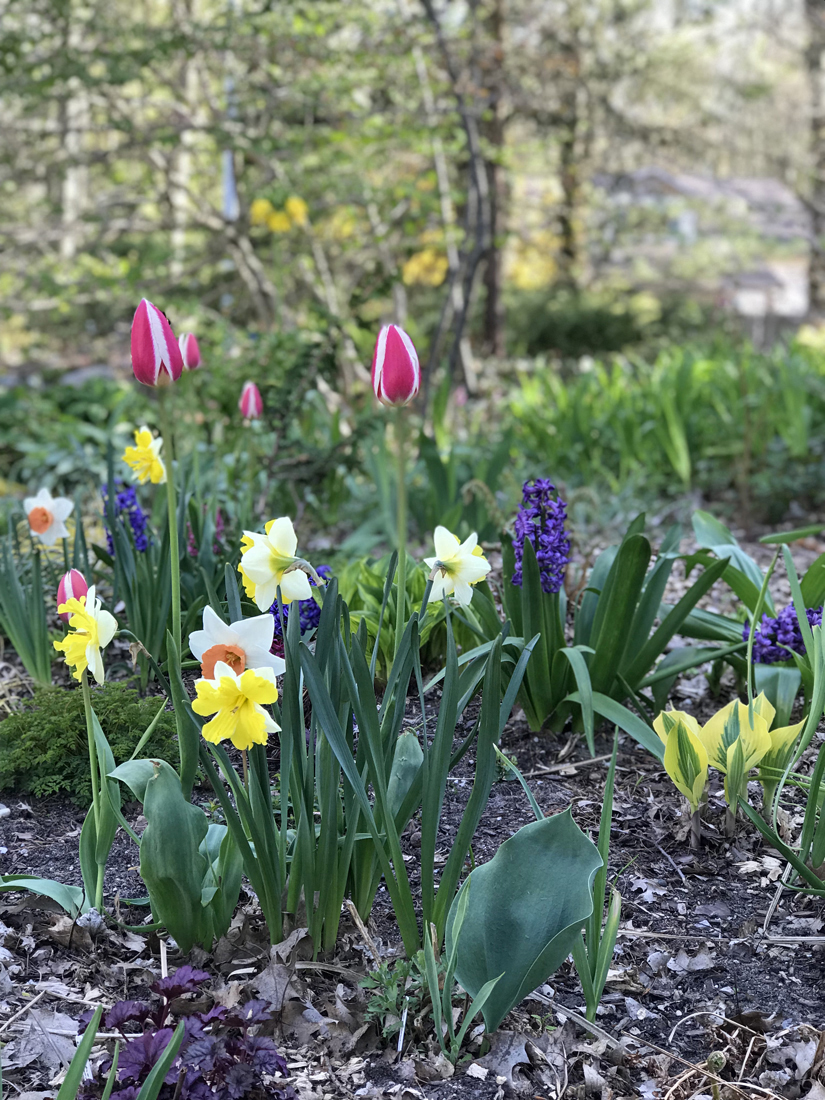
| COMPANION PLANTING HIDES SPRING BULB FOLIAGEIf you have planted quite a few spring flowering bulbs and really want them to take center stage in the spring landscape, pair them with later blooming plants. That way, you’ll get to extend your season of color in the garden much longer. The best plants to cover up spring bulbs as they go dormant are those that have a dense habit, arching branches or leaves that are similar in shape to your bulbs (for instance, daylilies which have similar leaves as daffodils). Look for perennials and shrubs that tend to leaf out later in spring so they don’t compete for sunlight or space with your bulbs. Look closely at the picture above to see the perennials popping up at the feet of the spring blooming daffodils, hyacinths and tulips. Coral bells, bee balm, hostas, goatsbeard and daylilies will fill in this bed once the bulbs are past their prime. They will help to mask the bulb foliage. Another advantage of planting companions with spring bulbs is that they will help to keep the soil around the bulbs drier in the summer. Once bulbs go back to sleep, they like to be kept on the dry side to prevent rotting. Companion plants will help to soak up moisture in the soil around the bulbs and, if they have large leaves, they can act like umbrellas. |
5 TYPES OF FLOWERS TO PLANT WHEN THE BULBS FADE
Here are five plants that won’t bloom at the same time as your bulbs but will make good companions for the rest of the season.
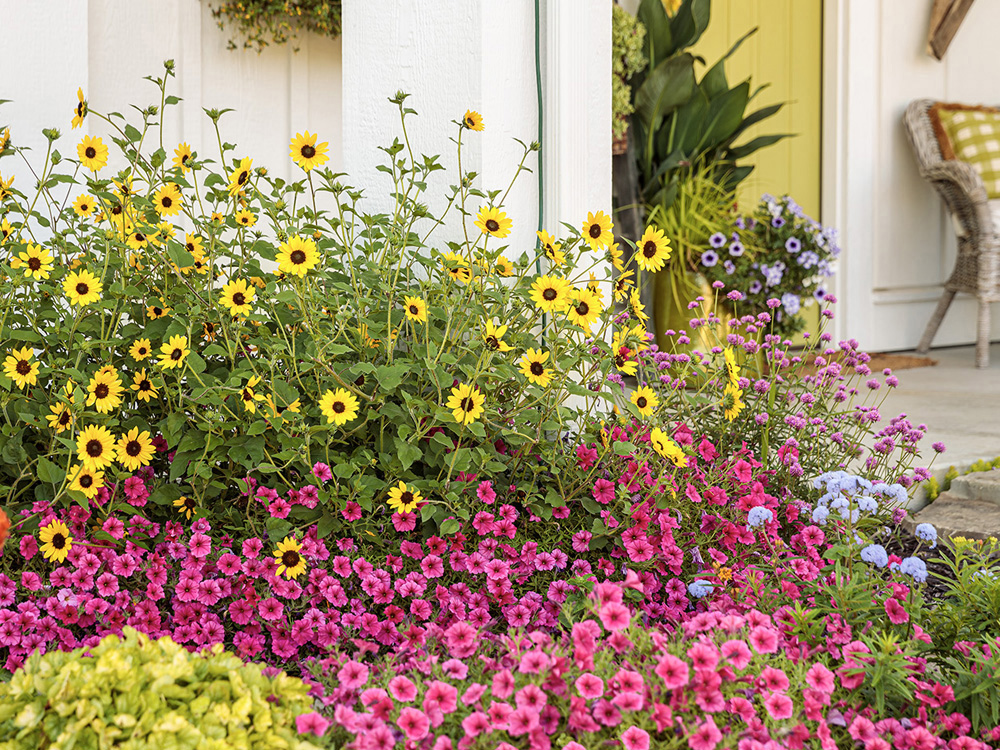
Suncredible® Yellow sunflowers with Supertunia Vista® Paradise petunias | Large Scale AnnualsRight around the time when your spring bulb flowers are beginning to fade, soil and air temperatures have usually risen enough to plant annuals outside. By late spring, you should be able to plant annuals in front of the bulbs that are beginning to go dormant to help hide their foliage. Since annuals are sold in small pots, you’ll avoid disturbing your bulbs’ roots because you’ll only need to dig small holes to plant them. Taller and more robust annuals like Suncredible® sunflowers, ColorBlaze® coleus, Angelface® angelonia, Rockin’® salvias, Truffula™ Pink gomphrena, Senorita Rosalita® cleome and Supertunia Vista® petunias are all good candidates for masking bulb foliage. By the time the annuals reach full size, your bulbs will be completely dormant. If you want to add more bulbs in the fall, simply remove the annuals and dig bulbs into the soil in their place. |
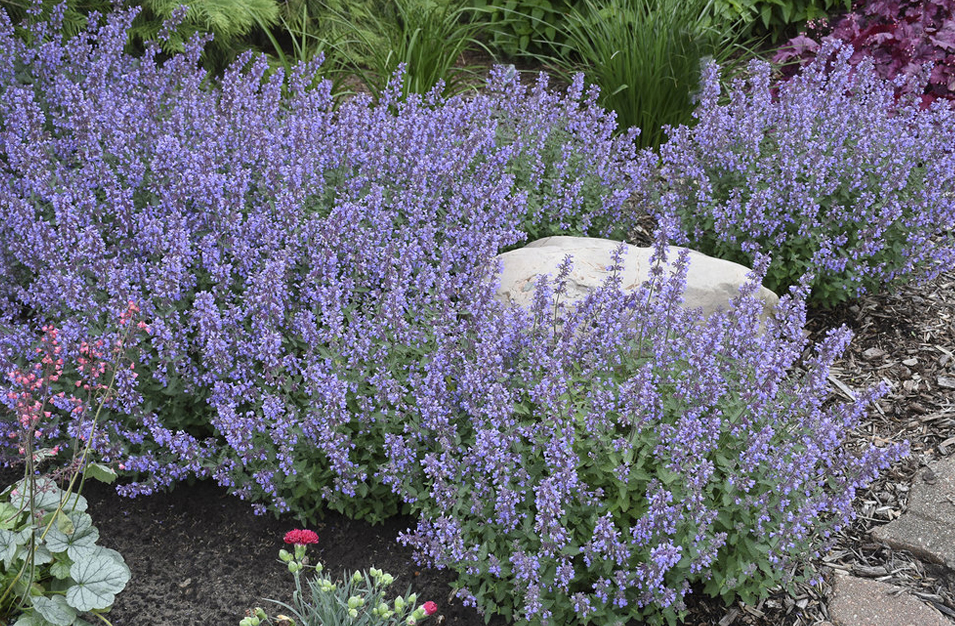
‘Cat’s Meow’ catmint | CatmintShortly after the bulb show comes to an end, catmint begins the next act with its periwinkle blue flowers in early summer. This perennial forms a broad clump that emanates from a central crown, and its long stems won’t prevent spring bulbs from popping up around it. However, those stems will nicely cover up the bulb foliage as it is going dormant. Bulbs with finely textured foliage like miniature daffodils, Dutch iris, muscari and crocus all make good companions for catmint. The broader habit of ‘Cat’s Meow’ catmint will cover more ground than dwarf varieties like ‘Cat’s Pajamas’. Height: 12-20”, spread: 18-36” (depending on cultivar), full sun, zone 3-8 |
Rainbow Rhythm® ‘Ruby Spider’ daylilies | DayliliesDaylilies usually start popping up in mid-spring, but their leaves won’t grow too tall to block the view of your spring bulbs until early summer. Since they bloom in the summertime, they bring color to that part of the garden long after the bulbs are finished. You could plant taller bulbs like globe alliums and gladiolus behind your daylilies, or shorter bulbs like crocus and scilla in front of them. We also like to pair daylilies with daffodils, snowdrops and Dutch iris since the strappy leaves of the bulbs tend to blend right in with the strappy leaves of the daylilies like camouflage. Height: 20-34”, spread: 18-24” (depending on cultivar), full sun to light shade, zone 3-9 |

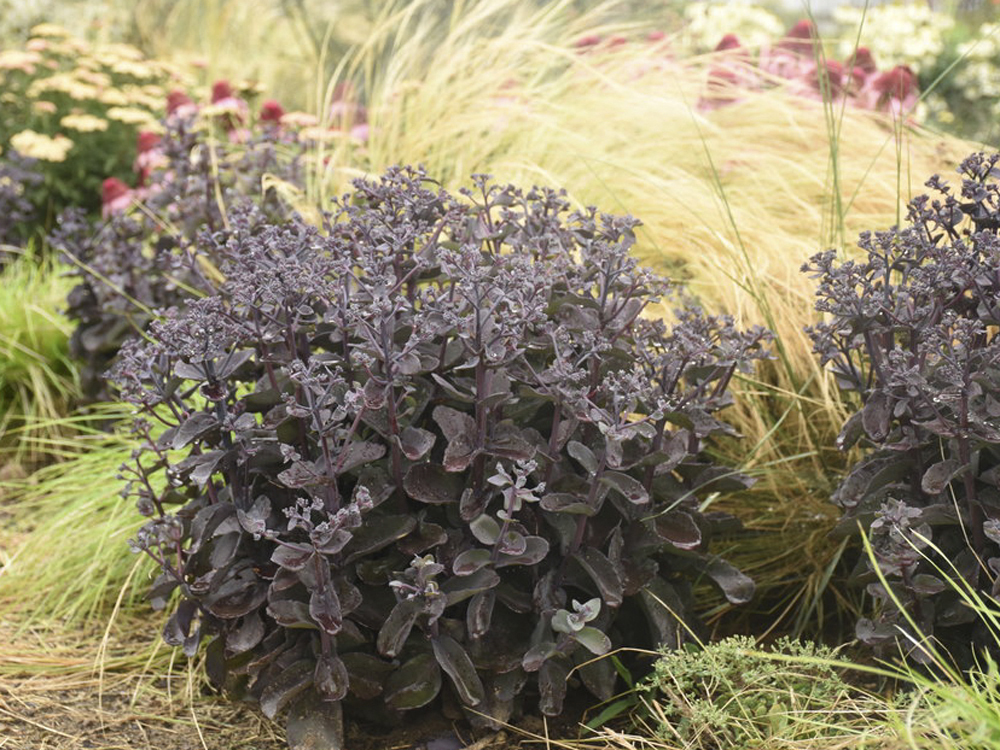
Rock ‘n Grow® ‘Back in Black’ stonecrop | Upright StonecropUpright stonecrop makes a perfect companion for spring bulbs for a number of reasons. Since this perennial is still emerging from the ground when tulips, daffodils and hyacinths are at their peak, it won’t cover up the view. But by the time the bulbs are ready to go dormant, it has developed a nice crown of densely mounding foliage that makes an effective screen. If you plant varieties with dark foliage like Rock ‘n Grow® ‘Back in Black’, your eye will naturally go to the colorful stonecrop instead of the dying bulb foliage. Stonecrop also makes a great companion for spring bulbs because both enjoy well-drained soils that stay drier in the summer. It’s better not to consistently irrigate them while the bulbs are dormant and the stonecrop is thriving the summer sunshine and heat. Height: 16-24”, spread: 26-32” (depending on cultivar), full sun, zone 3-9 |
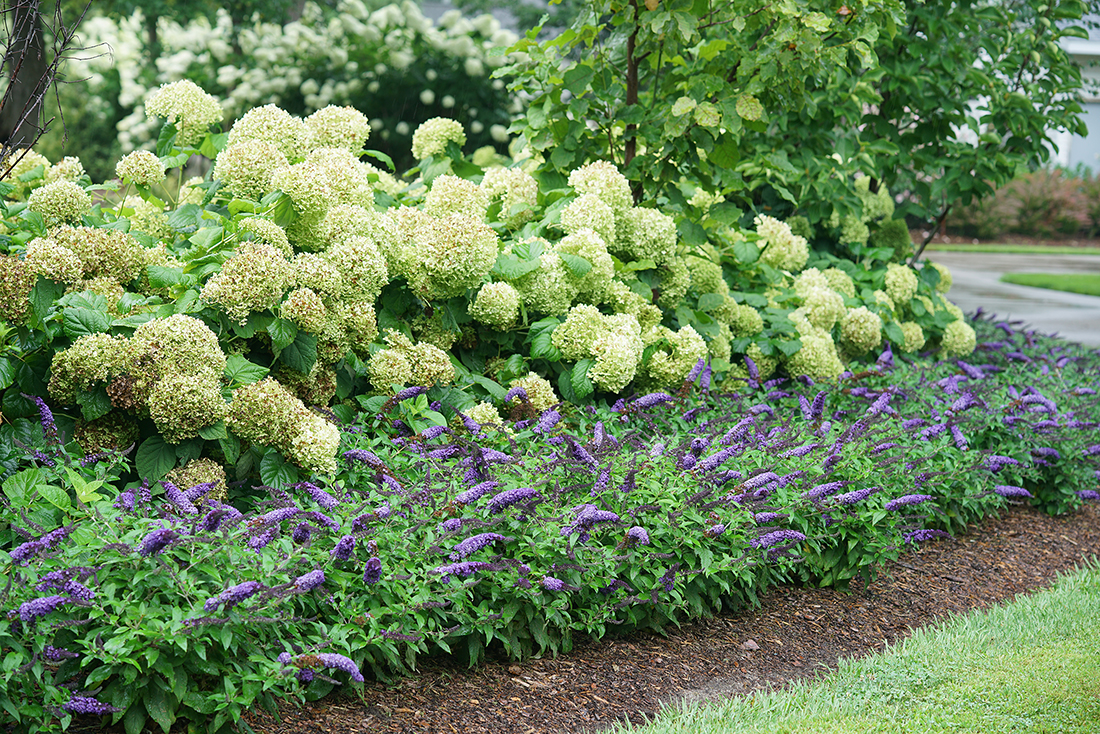
Pugster Blue® butterfly bush with Incrediball® smooth hydrangea | Shrubs with Widespread BranchesWoody plants can make good camouflage for spring bulbs that are going dormant, too. Those that leaf out late like butterfly bush, and those with layered or widespread branches like doublefile viburnum and mockorange work the best. Their stems are bare in early to mid-spring when bulb flowers are blooming under and amongst their branches. Then, when the shrubs’ leaves unfurl, they seal off the view of the browning bulb foliage. Tuck short bulbs like crocus, muscari, scilla, snowdrops and windflowers (Anemone blanda) under the widespread branches of your shrubs in the fall to enjoy a beautiful spring show. |
Want to dive deeper? Check out these resources:
- Explore: Learn more about Proven Winners bulbs.
- Read: How to Plant Your Garden for Continuous Color
- Discover: Find More Companion Plants for Spring Bulbs
Stay up to date with Proven Winners on Facebook, Instagram, Pinterest, YouTube and TikTok.
Patent Information: Suncredible® Yellow Helianthus USPP31819 US Utility Patent Pending; Supertunia Vista® Paradise Petunia USPP30965 Can6294; Truffula™ Pink Gomphrena pulchella USPP31728 Can6276; Señorita Rosalita® Cleome USPP19733 Can3290; 'Cat's Meow' Nepeta faassenii USPP24472 Can5098; 'Cat's Pajamas' USPP31127 CanPBRAF; Rock 'N Grow® 'Back in Black' Sedum USPP33632 CanPBRAF; Pugster Blue® Buddleia USPP28794 Can6486; Incrediball® Hydrangea arborescens USPP20571 Can4166
Contributor Bio: Susan Martin is an avid zone 6 gardener and content creator who enjoys spreading her passion for plants to others across North America.
All images courtesy of Proven Winners.