



5 Landscape Recipes for Pollinators
If one of your garden goals this season is to support local wildlife, choosing the right plants for bees and butterflies is the perfect place to start. In this guide, we feature five pollinator garden designs that offer nectar-rich food sources from late spring through early fall. These versatile landscape recipes can be scaled to fit any space, helping you master wildlife-friendly gardening while creating a beautiful, high-performance backyard sanctuary.
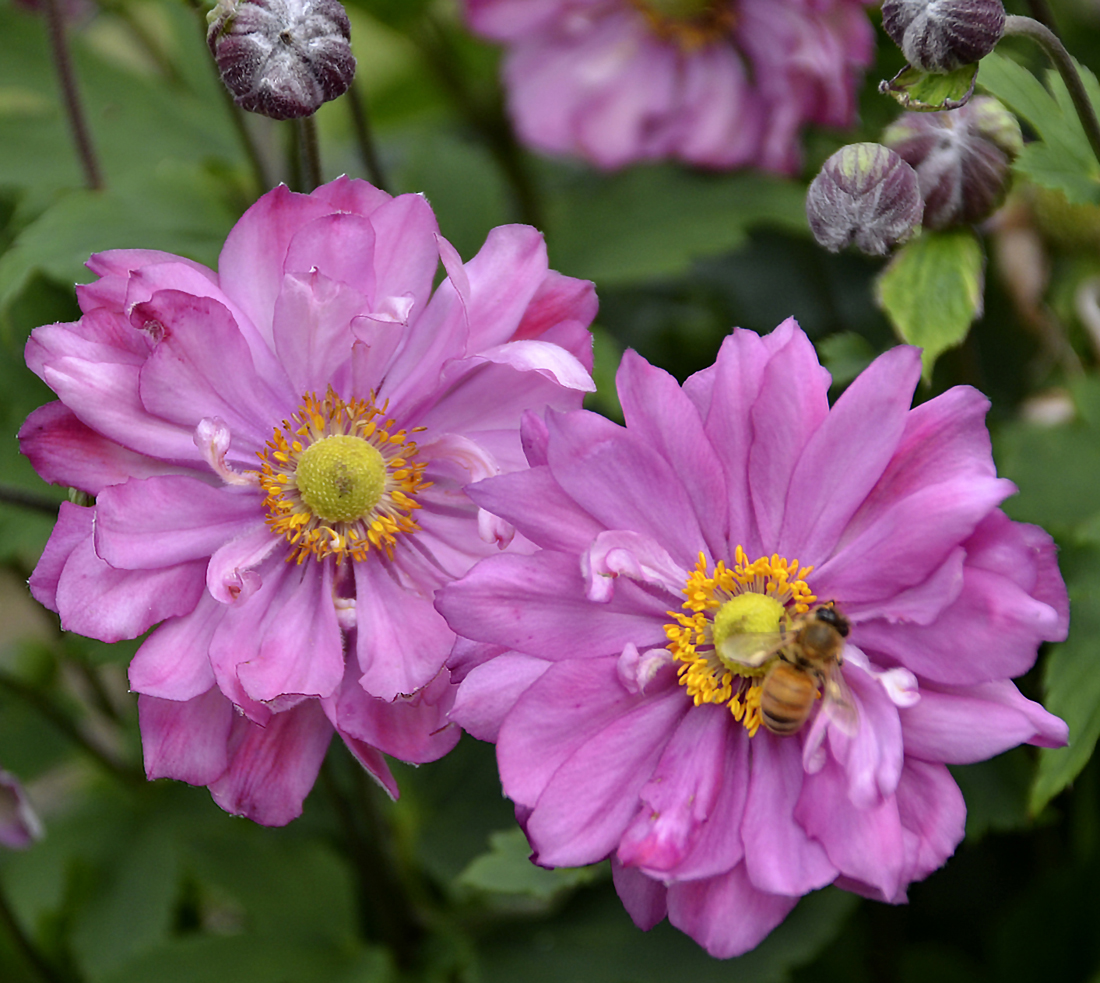 Fall in Love® ‘Sweetly’ Japanese anemones provide a late season food source for pollinating bees. Fall in Love® ‘Sweetly’ Japanese anemones provide a late season food source for pollinating bees. | If one of your garden goals this season is to grow more plants for bees, butterflies and hummingbirds, you’ll find pollinator-friendly landscape recipe ideas here that’ll have your garden in bloom from late spring through early fall. You could plant your garden just like you see here or take a small portion of a recipe and duplicate it in a way that fits your space. Any little bit you can do to make your garden more hospitable to these important creatures is a positive step in the right direction. |
Two Important Attributes of Pollinator Gardens: Sun and Plentiful Blooms
You’ll notice that all five of the landscape recipes pictured in this article are for full sun locations. One of the reasons why this is important is because pollinating bees and butterflies are cold-blooded. That means they need the warmth of the sun to raise their body temperature so they can get moving for the day and start foraging. Pollinators will wander into cooler shade gardens once they are warmed up, but they’ll eventually seek the sun again, especially when the weather is cool.
Another important attribute is that there is more than one plant that pollinators can feed from in each of these designs. Planting a single type of bee-friendly flower en masse or several types close together will have a greater draw for pollinators. These creatures need to gather as much food as possible every day, and it is more efficient for them to stop in a single location where many nutritious flowers are present at once.
Let’s take a closer look at five landscape recipes that will draw in pollinating bees, butterflies and hummingbirds.
| Late Spring Perennial BorderAttracts: Bees, butterflies, hummingbirdsPollinator Plant List:
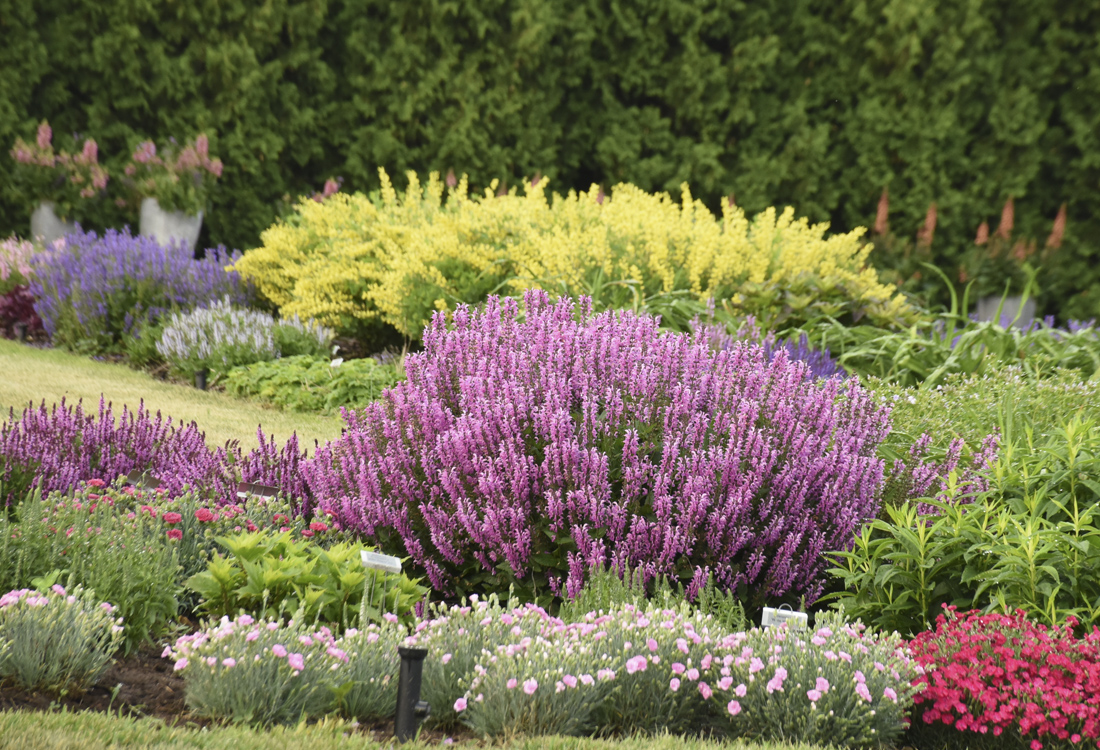
Multiple varieties of perennial salvia blooming all at once, including ‘Back to the Fuchsia’, standing proud front and center, creates a strong draw for pollinators to this garden in late spring (late May in zone 6a). While bees that prefer to forage near the ground find the perennial dianthus tasty, larger bumblebees are frequent visitors of the 4’ tall Baptisia pictured here in the background. All of these perennial salvia varieties will continue to rebloom intermittently throughout the summer. Tall garden phlox and rose mallow, which are not as noticeable in this garden in late spring, will take center stage in July and August and continue to provide sustenance to pollinators. |
| Early Summer Mixed BorderAttracts: Bees, butterflies, hummingbirdsPollinator Plant List:
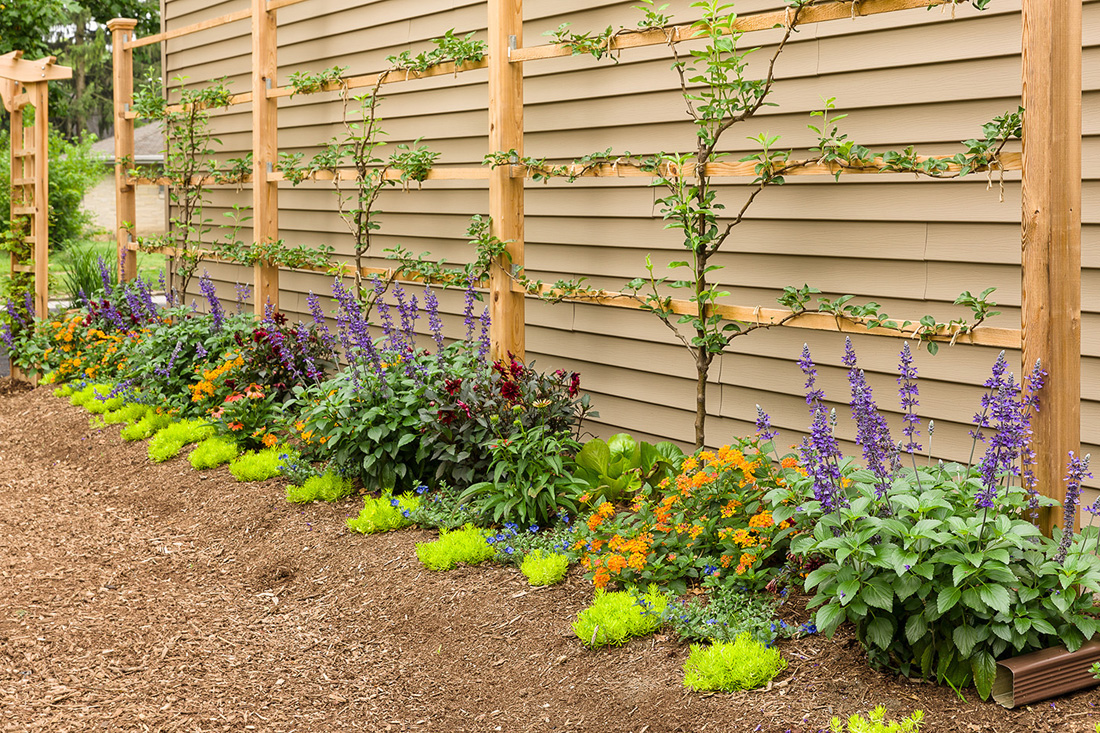
This newly planted border which runs along the south side of a garage is already providing food for pollinating bees even in its first year. Several types of annuals provide a continuous supply of flowers from planting time until frost. Perennials fill in the gaps and will take on a larger presence as they grow and mature through the years. You can see here how pollinator gardens can contain a wide variety of plant types—annuals to trees and everything in between. Altogether, they form a long border filled with many kinds of flowers that will continually attract bees, butterflies and hummingbirds throughout the season. |
| Heat Tolerant Entrance Garden in MidsummerAttracts: Bees, butterflies, hummingbirdsPollinator Plant List:
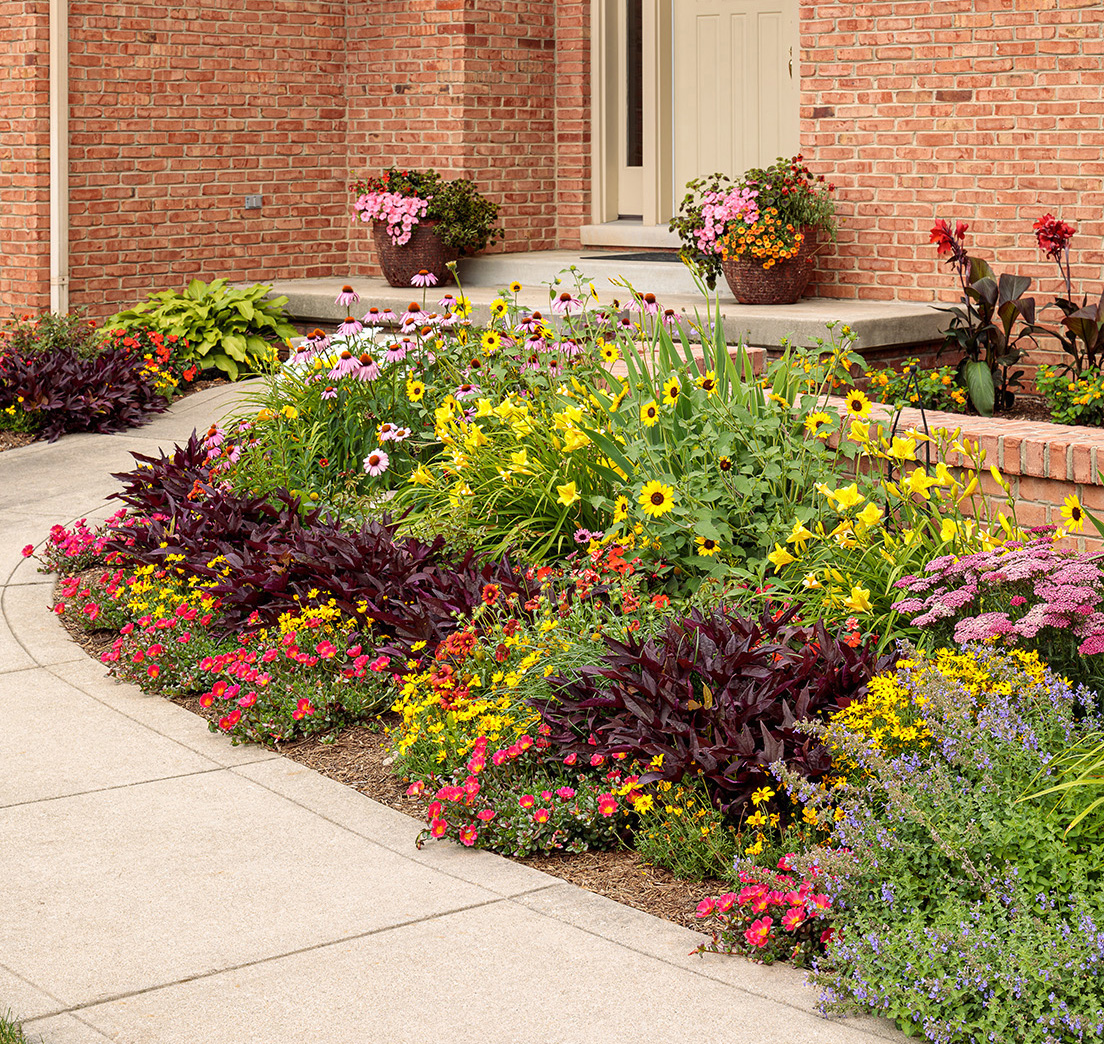
Could your front entryway use some sprucing up? Fill the border along your walkway with plants that attract butterflies and they’ll be happy to welcome you home. In this hot, sunny space where heat is constantly reflected off of the cement and brick surfaces, we filled in a sparse border with colorful, pollinator-friendly annuals and perennials. Drip irrigation keeps the plants watered just enough, though many of them can tolerate drier soils well. If you have an existing evergreen hedge bordering your walkway, maybe there is room to tuck in a few Mojave purslane or Goldilocks Rocks bidens plants in between. Even better, enlarge your bed to be 12 to 18” wider to fit a whole row of flowers in front. |
| Late Summer Pollinator BuffetAttracts: Bees, butterflies, hummingbirdsPollinator Plant List:
This small but brilliant vignette was absolutely abuzz on the warm August evening it was photographed. A dozen or more pollinating bees and tiny moths were busy examining every inch of the ‘Serendipity’ Allium flowers. Honeybees were poking in and out of the catmint blooms before heading over to feed on the remaining salvia flowers. While the ornamental grass does not provide food for pollinators, it does provide a place for them to seek shelter and rest. Ornamental and edible herbs like the Allium and catmint shown here are always a favorite of pollinating bees or butterflies but are typically very resistant to deer and rabbit browsing. Plants that pull double duty like this are especially good for gardens where space is limited and you want to make good use of every nook and cranny. |

| Early Fall’s BountyAttracts: Bees, butterfliesPollinator Plant List:
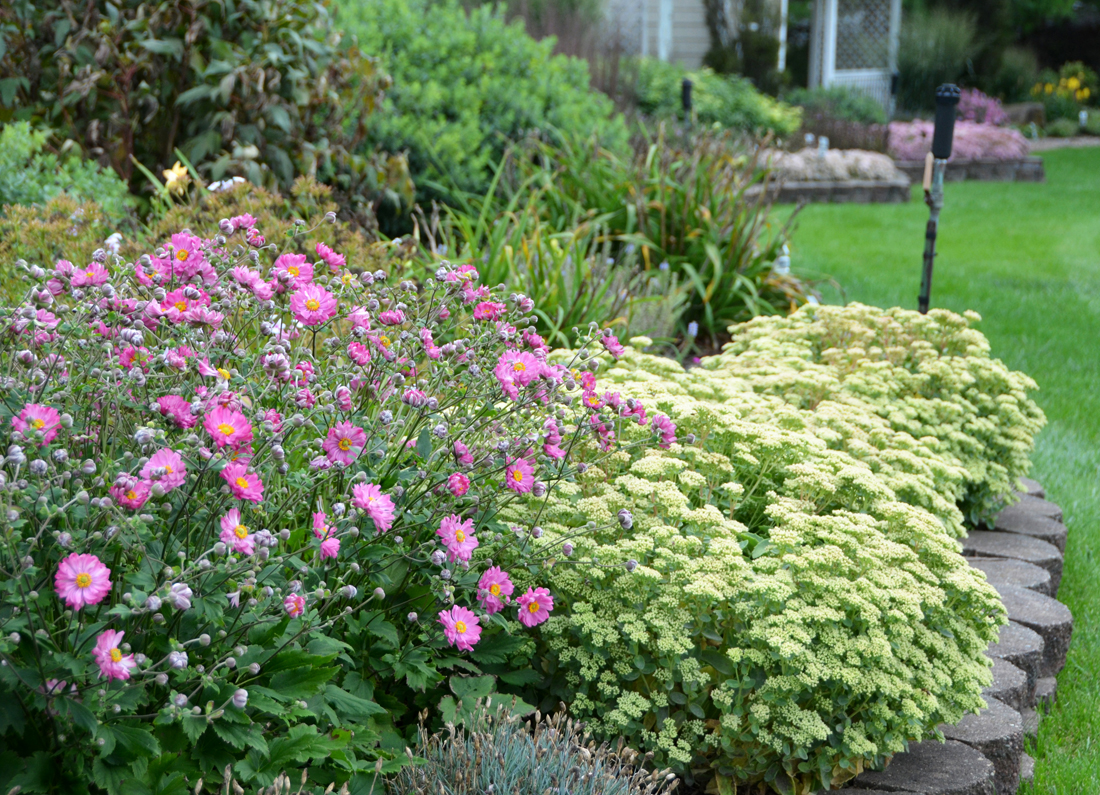
Food sources are often most plentiful during the summer but begin to become sparser as the season’s end draws near. When considering what kinds of pollinator-friendly plants to add to your landscape, include at least a few that will flower once the days become shorter and the nights are cooler. Stonecrop and Japanese anemones typically bloom until frost and are an important late season food source for bees and migrating butterflies. Other pollinator plants that continue late into the season include Rockin’® and Profusion salvias, ‘Denim ‘n Lace’ Russian sage, Sweet Romance® English lavender, Pugster® butterfly bush, Ringo® rose and Paraplu® rose of Sharon. Planting them in groups will help pollinators spot them when passing by.
|
Want to learn more about gardening for pollinators?